
 EN
EN



When performance and comfort matter most, the material you choose defines everything. nylon spandex fabric has become the industry benchmark for compression garments and activewear precisely because it delivers on every technical demand that athletes and fitness enthusiasts place on their clothing. From four-way stretch to moisture control, nylon spandex fabric addresses needs that no single-fiber textile can match. Understanding why nylon spandex fabric is essential begins with understanding what modern gym wear must accomplish during high-intensity movement.
Compression wear and gym apparel face extraordinary stress during use. Garments must stretch repeatedly without losing shape, resist abrasion, manage moisture, and stay comfortable against the skin for extended sessions. Nylon spandex fabric is engineered to meet all these demands simultaneously. The blend combines the structural resilience of nylon with the exceptional elasticity of spandex, creating nylon spandex fabric that outperforms alternatives in every critical performance category. This article explains the core reasons why nylon spandex fabric remains the essential choice for brands and manufacturers producing compression and gym wear.
The Structural Performance Advantages of Nylon Spandex Fabric
Four-Way Stretch and Shape Retention
The defining characteristic of nylon spandex fabric is its four-way stretch capability. Unlike woven fabrics that only stretch on the bias, nylon spandex fabric stretches both along and across the grain, allowing garments to move naturally with the body in every direction. This property is non-negotiable for compression leggings, gym shorts, sports bras, and fitted tops. When a garment made from nylon spandex fabric is pulled, twisted, or compressed during squats, lunges, or overhead lifts, it returns to its original dimensions without distortion. This elastic recovery is what gives nylon spandex fabric its superior shape retention over extended wear and repeated washing cycles.
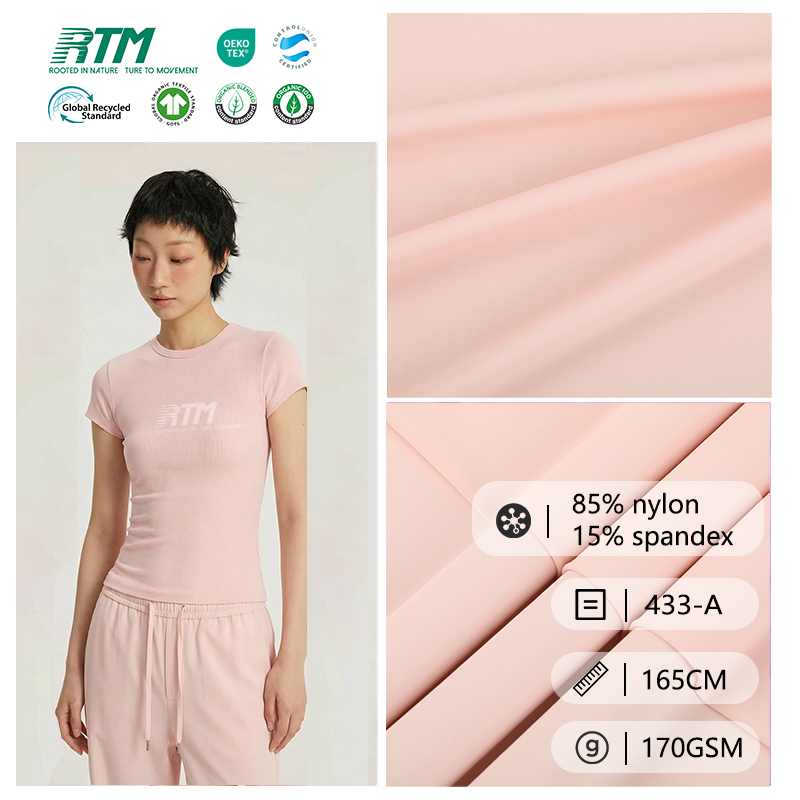
The nylon component in nylon spandex fabric contributes to this recovery by providing a firm, resilient fiber structure that supports the spandex strands. Spandex alone cannot form a stable knit construction, which is why nylon spandex fabric blends nylon as the primary carrier fiber, typically at ratios such as 85% nylon and 15% spandex. This ratio gives nylon spandex fabric the ideal balance between stretch freedom and structural integrity. Brands producing performance leggings and compression tights rely on nylon spandex fabric at this specific ratio to achieve consistent fit across all size ranges.
Durability and Abrasion Resistance
Gym wear is subject to friction from equipment, flooring, and repetitive movement. Nylon spandex fabric handles abrasion far better than cotton blends or polyester spandex alternatives. Nylon is one of the strongest synthetic fibers available, and when it forms the primary structure of nylon spandex fabric, the resulting textile resists pilling, snagging, and surface wear that degrade cheaper garments quickly. For B2B buyers and apparel manufacturers, choosing nylon spandex fabric means producing garments that maintain their appearance and function through hundreds of washes and intensive daily use. This durability directly influences customer retention and brand reputation in the activewear market.
Compression and Fit Performance in Nylon Spandex Fabric
Compression Support for Muscle Groups
Compression wear is clinically and athletically valued for the consistent pressure it applies to muscle groups, improving circulation and reducing fatigue. Nylon spandex fabric is uniquely suited for compression applications because it can be engineered to deliver precise, graduated compression without restricting movement. The tightness of the knit structure in nylon spandex fabric determines compression level, and manufacturers can adjust this by varying the yarn denier and knit density. This means nylon spandex fabric can be produced to target light support for yoga wear, moderate compression for running tights, or firm compression for recovery garments, all while maintaining the same comfortable, second-skin fit that nylon spandex fabric is known for.
Smooth, Comfortable Fit Against the Skin
Comfort during athletic activity depends heavily on how fabric interacts with skin. Nylon spandex fabric has a naturally smooth surface that reduces friction and chafing during extended workouts. Unlike rougher textiles, nylon spandex fabric glides against the skin rather than dragging, which is critical for high-rep activities like cycling, running, and circuit training. The softness of nylon spandex fabric also makes it suitable for sensitive skin, which is an important consideration for brands targeting a broad consumer base. In double knit constructions, nylon spandex fabric creates a flat inner surface that maximizes wearing comfort while the outer surface maintains visual quality and color depth.
Moisture Management and UV Protection in Nylon Spandex Fabric
Moisture Wicking and Quick-Dry Properties
Effective moisture management separates functional gym wear from basic athletic clothing. Nylon spandex fabric naturally wicks moisture away from the skin and transfers it to the fabric surface where it evaporates quickly. This moisture management performance is a direct result of the nylon fiber structure, which does not absorb water at the same rate as natural fibers. Because nylon spandex fabric stays relatively dry during exercise, it prevents the heavy, clinging sensation that cotton garments develop. For compression wear specifically, nylon spandex fabric maintains its compression properties even when wet, ensuring consistent support throughout the workout. Manufacturers producing premium activewear specify nylon spandex fabric for these reasons, knowing that moisture performance directly affects end-user satisfaction.
UV Protection as a Functional Benefit
Outdoor training and sports have created demand for gym wear that also provides UV protection. Nylon spandex fabric in high-density knit constructions naturally blocks a significant proportion of UV radiation, and many performance grades of nylon spandex fabric are finished with UV-protective treatments to achieve UPF ratings. This makes nylon spandex fabric not only a gym wear essential but also a smart choice for outdoor leggings, training shorts, and swimwear-adjacent activewear. The dual functionality of nylon spandex fabric as both a performance compression textile and a UV-protective material adds tangible value for both manufacturers and consumers.
FAQ
What makes nylon spandex fabric better than polyester spandex for compression wear?
Nylon spandex fabric offers superior softness, smoother texture, and better elastic recovery compared to polyester spandex blends. While polyester spandex fabric can be less expensive, nylon spandex fabric provides a more comfortable fit against the skin and maintains compression properties more effectively over repeated use and washing. For premium compression garments, nylon spandex fabric is generally preferred by performance-focused brands.
What is the ideal nylon to spandex ratio in nylon spandex fabric for gym leggings?
An 85% nylon and 15% spandex ratio is widely regarded as the optimal composition for gym leggings and compression tights. This ratio in nylon spandex fabric balances maximum stretch and recovery with the structural integrity needed for shape retention and durability. Adjusting the spandex percentage higher increases elasticity but may reduce abrasion resistance, so 85/15 nylon spandex fabric remains the industry standard for performance leggings.
Is nylon spandex fabric suitable for both compression and casual gym wear?
Yes, nylon spandex fabric is versatile enough for both applications. For compression-specific garments, manufacturers select tighter knit constructions of nylon spandex fabric to achieve the required pressure levels. For casual gym wear such as relaxed-fit shorts or training tops, nylon spandex fabric in a looser knit delivers comfort and freedom of movement without intense compression. This versatility makes nylon spandex fabric the preferred textile across the full range of activewear product categories.